Mobile deepfake detection and verification for business and consumers
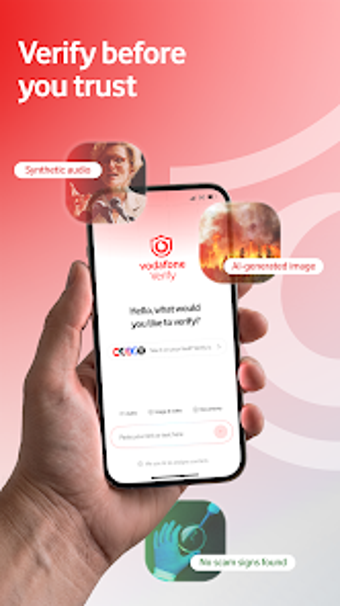
Analyzes video, audio, images, text and documents to flag probable AI manipulation and deepfakes across channels. Vodafone Verify, built by Synhawk s.r.o., targets Vodafone customers in the business-productivity space. It combines on-device processing, social-media link checks, and an indicative risk score with explanations to support judgement. The app fits individual consumers, business professionals, and public institutions who need an extra verification step for suspicious messages, shared media, or external links.
Detects multi-format manipulation with focused AI models
Verify inspects video, audio, images, text and documents using foundation models to identify synthetic artifacts, which positions the app as a tool for screening varied media types. The workflow accepts direct shares from other apps and social media links, and returns a probability-style risk score plus an explanatory note. Those outputs are designed to help users decide whether content likely shows signs of AI generation or tampering.
Integrates into verification workflows used by professionals
The app structures work around quick intake and assessment: users share or upload suspicious content, the system analyses it, and returns an indicative score and explanation. This flow suits professionals who need a rapid, single-result check for a message or post rather than a forensic report. The tool's link verification for platforms such as YouTube, TikTok, Instagram, and Facebook supports screening content hosted off-device.
Access, privacy, and onboarding factors that shape adoption
Access requires a license key provisioned through the My Vodafone self-care portal or app, which frames the audience as Vodafone customers. Privacy is handled with on-device verification where possible and encrypted transit, and Synhawk states no third-party data sharing. The license gate and the explanatory risk scoring mean users must accept a probability-based result rather than a categorical conclusion.
Performance scope and how it fits organisational needs
Synhawk links the app to telco-level detection and meeting protections, which suggests a multi-layer deployment across devices and network signals. On-device processing reduces reliance on remote servers for private checks, while the collaboration with Stanford-affiliated researchers underpins the reported detection approach. Early user feedback highlights detection accuracy for manipulations hard to spot unaided, indicating practical value for teams defending reputation or financial integrity.
Who should deploy Verify and where its limits lie
Verify is a pragmatic option for Vodafone customers, business professionals, and institutions that need quick, cross-format signals about potential synthetic media. It supports both private on-device checks and integration with carrier-level detection, but its outputs are probability-based and intended as decision support rather than definitive proof. Organisations that require legal-grade authentication should use these results alongside formal forensic processes.